
Perception
- Perception ≠ mental copy of stimuli
- Perception is the process and product of actively selecting and organizing sensory information.
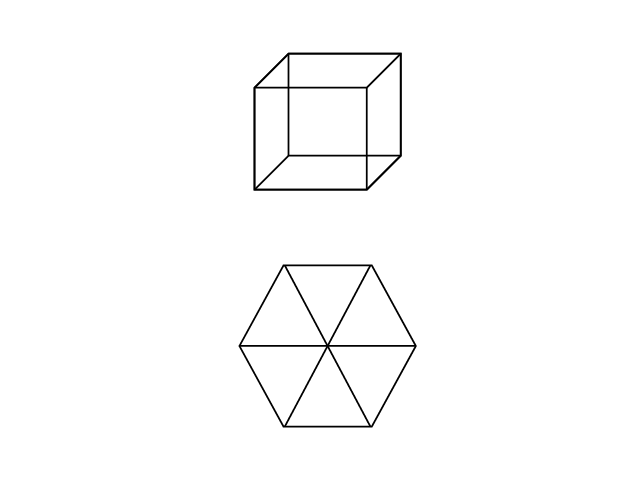
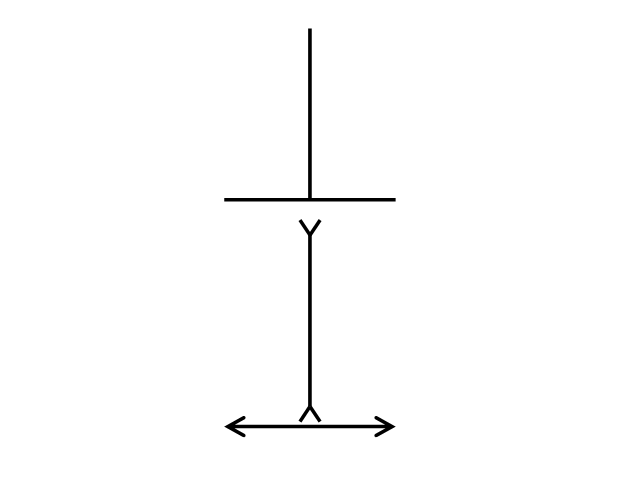
- Limits and Laws (e.g., contrasts, 3D, Faces, Gestalt Laws
Limits of Perception: Light
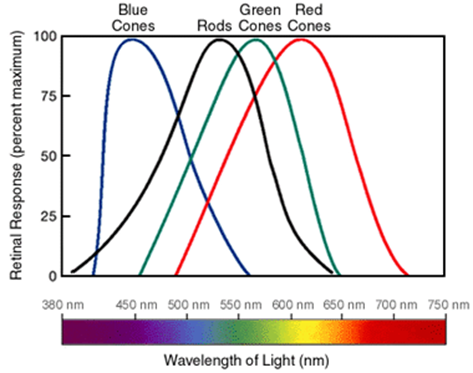
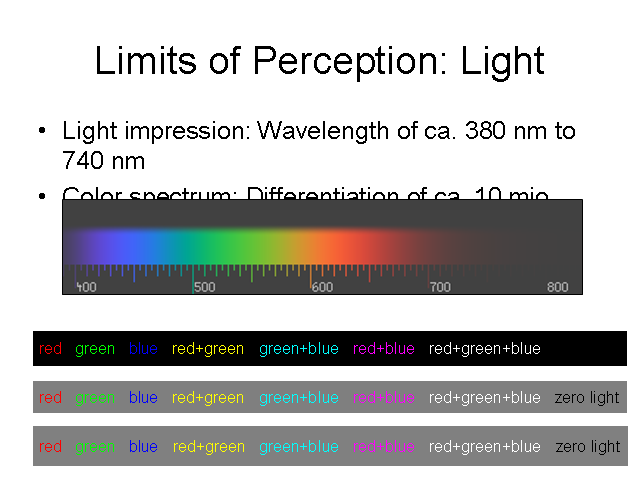
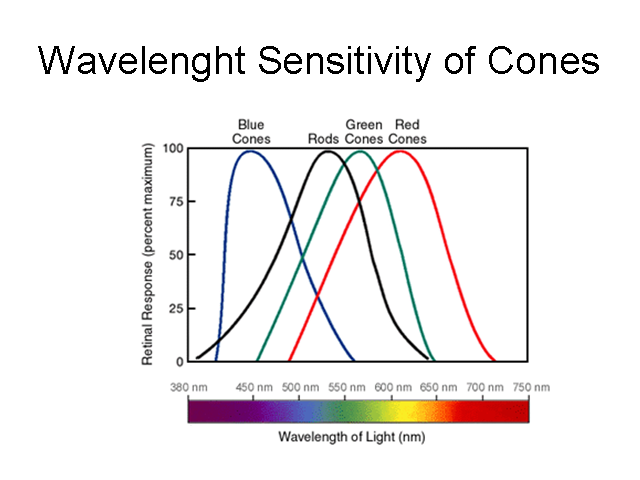
- Light impression: Wavelength of ca. 380 nm to 740 nm
- Color spectrum: Differentiation of ca. 10 mio colors
| red | green | blue | red+green | green+blue | red+blue | red+green+blue | zero light |
| red | green | blue | red+green | green+blue | red+blue | red+green+blue | zero light |
| red | green | blue | red+green | green+blue | red+blue | red+green+blue | zero light |

The Opponent Process Theory -
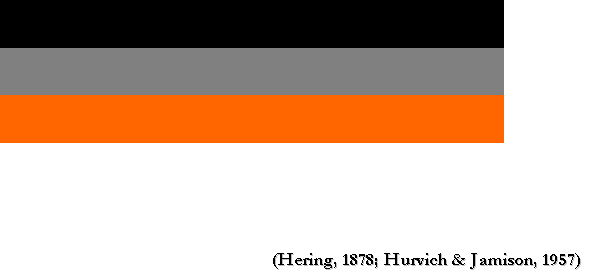
- Cells are connected so as to place sensations of:
- red in opposition to green
- blue in opposition to yellow
- black in opposition to white
Psychophysics of Sensation
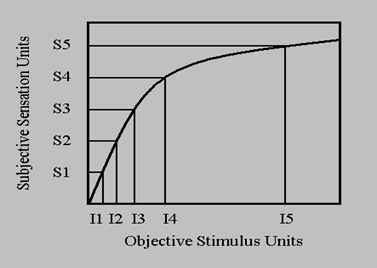
Weber (1846):
Just noticable difference (JND, ∆I) = k•I (stimuli-specific)
- Fechner (1860): Sensation (S) = K • log I
Limits of Perception: Sound
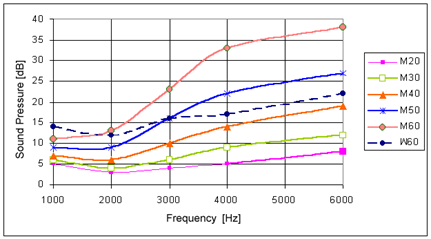
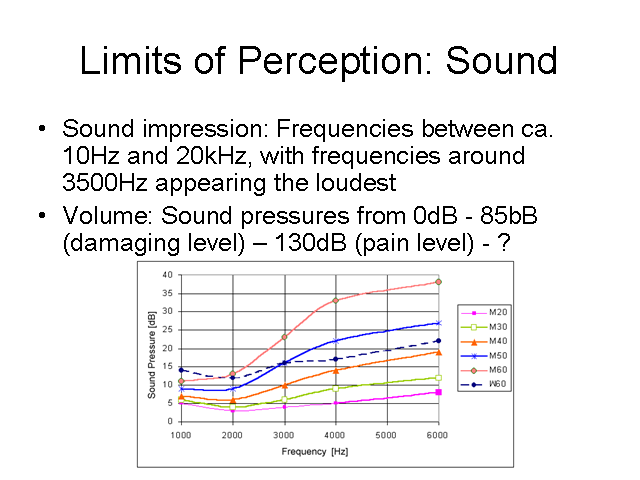
- Sound impression: Frequencies between ca. 10Hz and 20kHz, with frequencies around 3500Hz appearing the loudest
- Volume: Sound pressures from 0dB - 85bB (damaging level) – 130dB (pain level) - ?
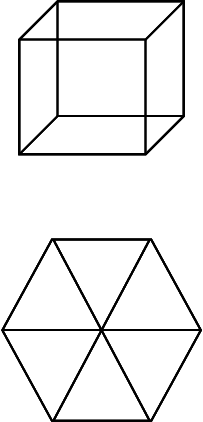
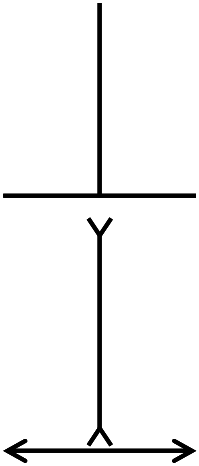

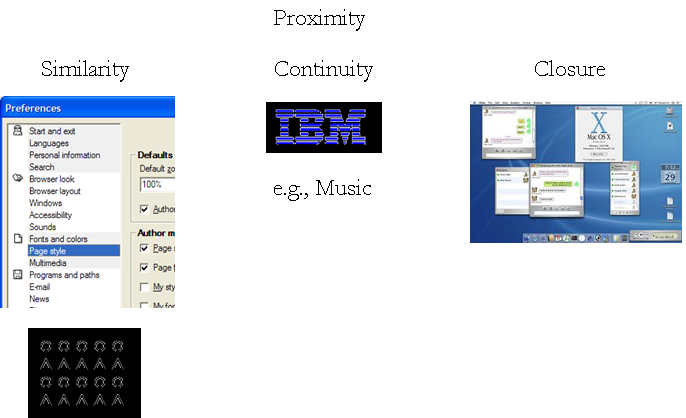
Perception and Attention
- Factors influencing visual representation, e.g.,:
- Visual saliency (e.g., pop-out, contrasts, familiar schemata)
- Cognitive saliency (e.g., gist, consistency, context)
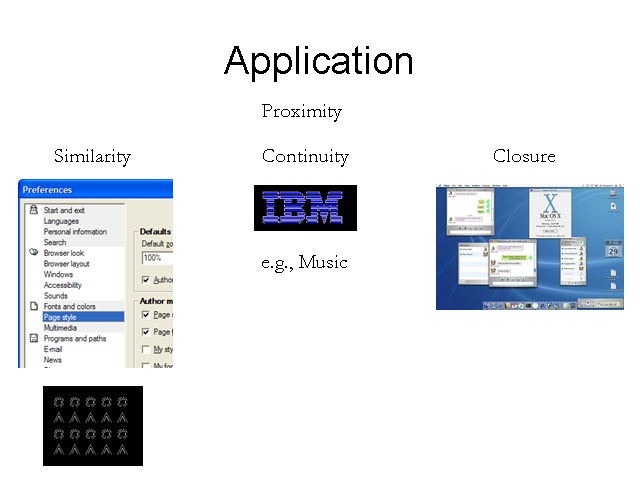
- Principles of perception (e.g., Gestalt laws)
- Task goal
- Key properties of attention:
- Division and Selection
- Control vs. Automation
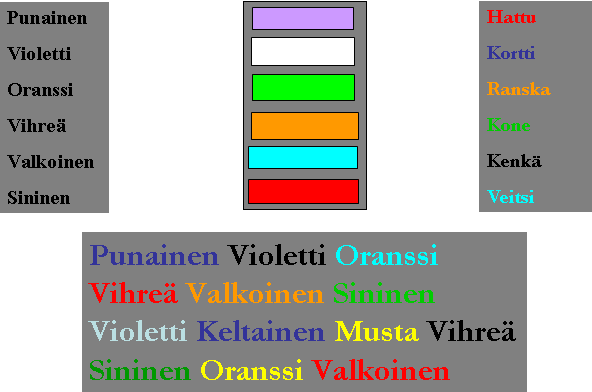






Important psychological concepts

- Capacity
- limitations of information processing
- Selectivity
- focus of information processing
- Division
- parallel processing
- Construction
- organization of information...
- ... into meaningful wholes
Users‘ Learning and Thinking
- Repetitio mater studiorum est
- Consistency and Interference
- Recognition is easier than recall
- Learning and thinking is context dependent
- Law of Experience -> Transfer of Learning
- Familiarity
- Affordance
- Metaphors (metapherein = to transfer)