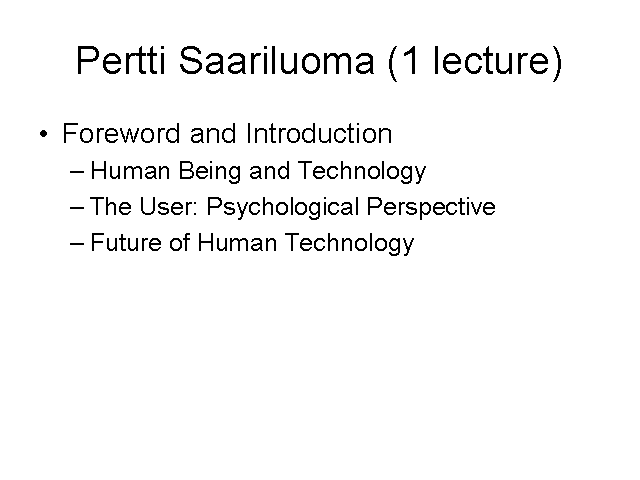
- Foreword and Introduction
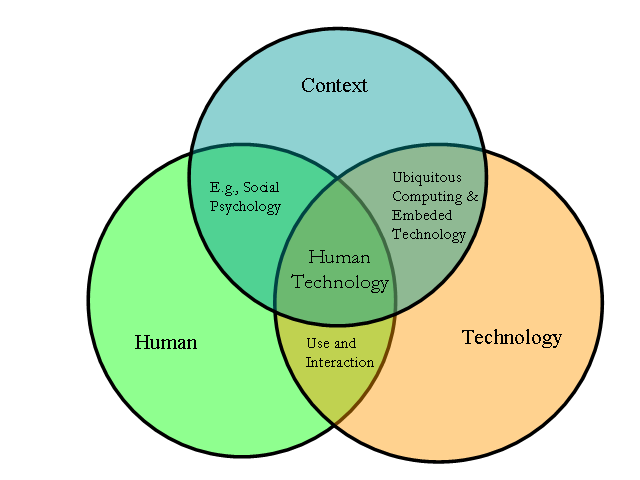
- Human Being and Technology
- The User: Psychological Perspective
- Future of Human Technology
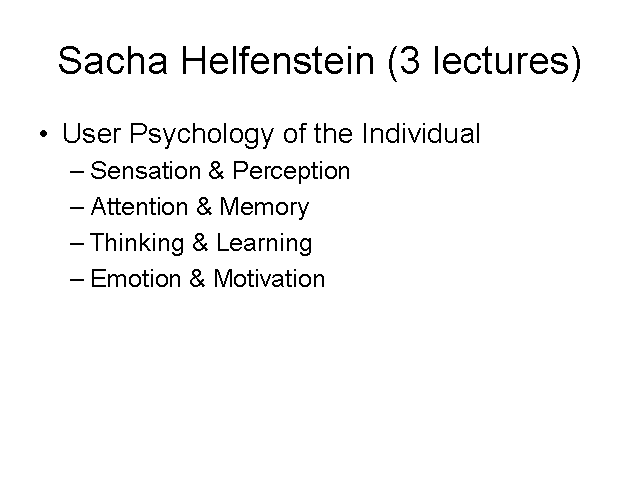
- User Psychology of the Individual
- Sensation & Perception
- Attention & Memory
- Thinking & Learning
- Emotion & Motivation
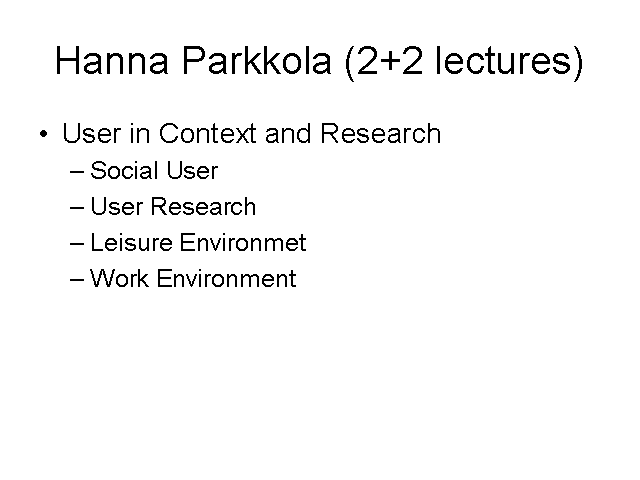
- User in Context and Research
- Social User
- User Research
- Leisure Environmet
- Work Environment
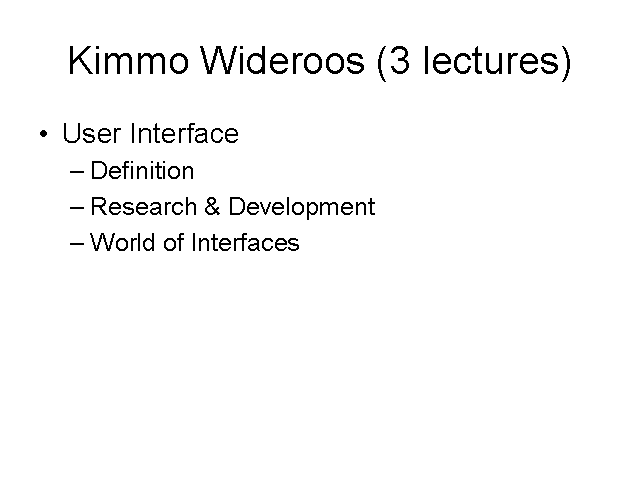
- User Interface
- Definition
- Research & Development
- World of Interfaces
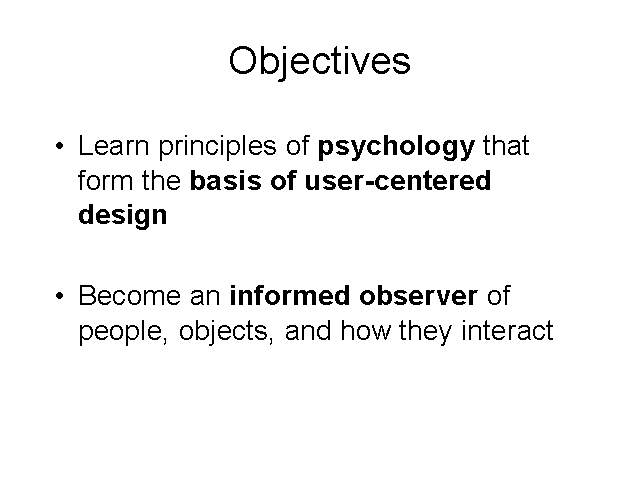
- Learn principles of psychology that form the basis of user-centered design
- Become an informed observer of people, objects, and how they interact
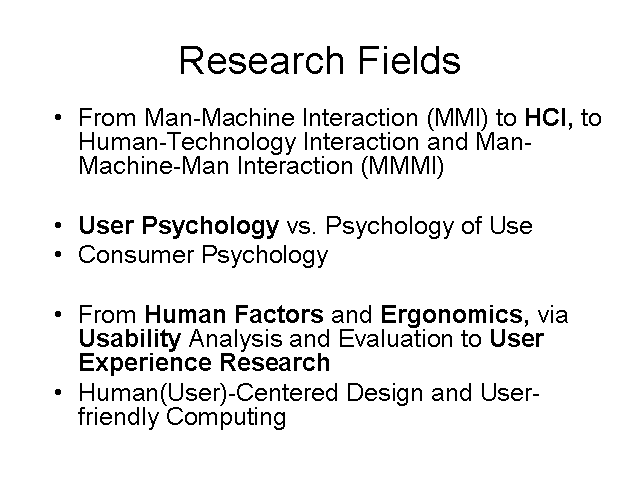
- From Man-Machine Interaction (MMI) to HCI, to Human-Technology Interaction and Man-Machine-Man Interaction (MMMI)
- User Psychology vs. Psychology of Use
- Consumer Psychology
- From Human Factors and Ergonomics, via Usability Analysis and Evaluation to User Experience Research
- Human(User)-Centered Design and User-friendly Computing
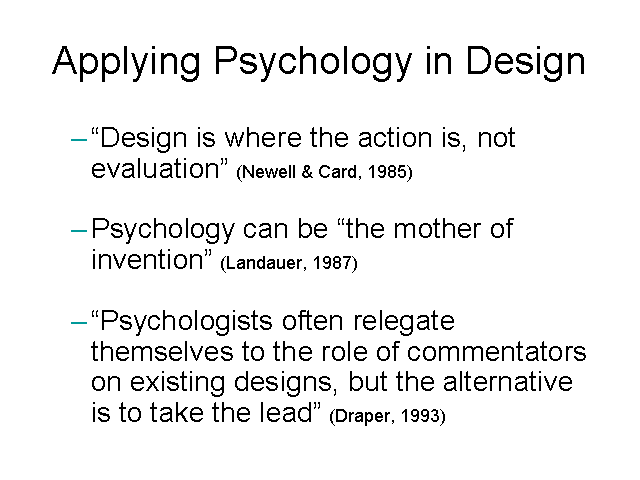
- “Design is where the action is, not evaluation” (Newell & Card, 1985)
- Psychology can be “the mother of invention” (Landauer, 1987)
- “Psychologists often relegate themselves to the role of commentators on existing designs, but the alternative is to take the lead” (Draper, 1993)
- Cognitive Psychology
- Sensation, Perception, and Motor Control
- Learning, Memory, and Thinking
- Emotion and Motivation
- Social Psychology
- Developmental Psychology
- Personality and Inter-individual Differences
- Applied Psychology
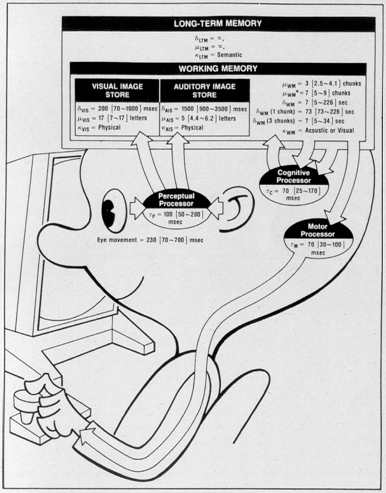
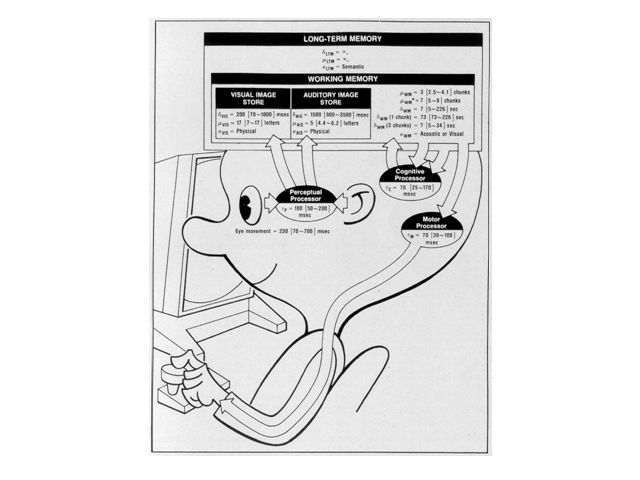
- Perception system
- Cognition system
- Motor system
- (Card, Moran, & Newell, 1983)
- Classic cognitive research investigates the laws and limits of human information processing (i.e., knowledge construction), including the capacities and structures in retaining, storing, and retrieving information.
- It does not explicate the contents of the mind.
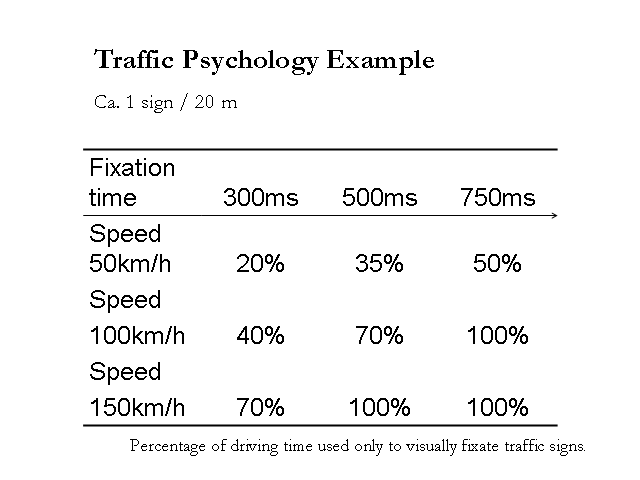
| Fixation time | 300ms | 500ms | 750ms |
| Speed 50km/h | 20% | 35% | 50% |
| Speed
100km/h | 40% | 70% | 100% |
| Speed
150km/h | 70% | 100% | 100% |